
Online Casinos with £1, £5, £10 or £15 Deposits
 Available in GB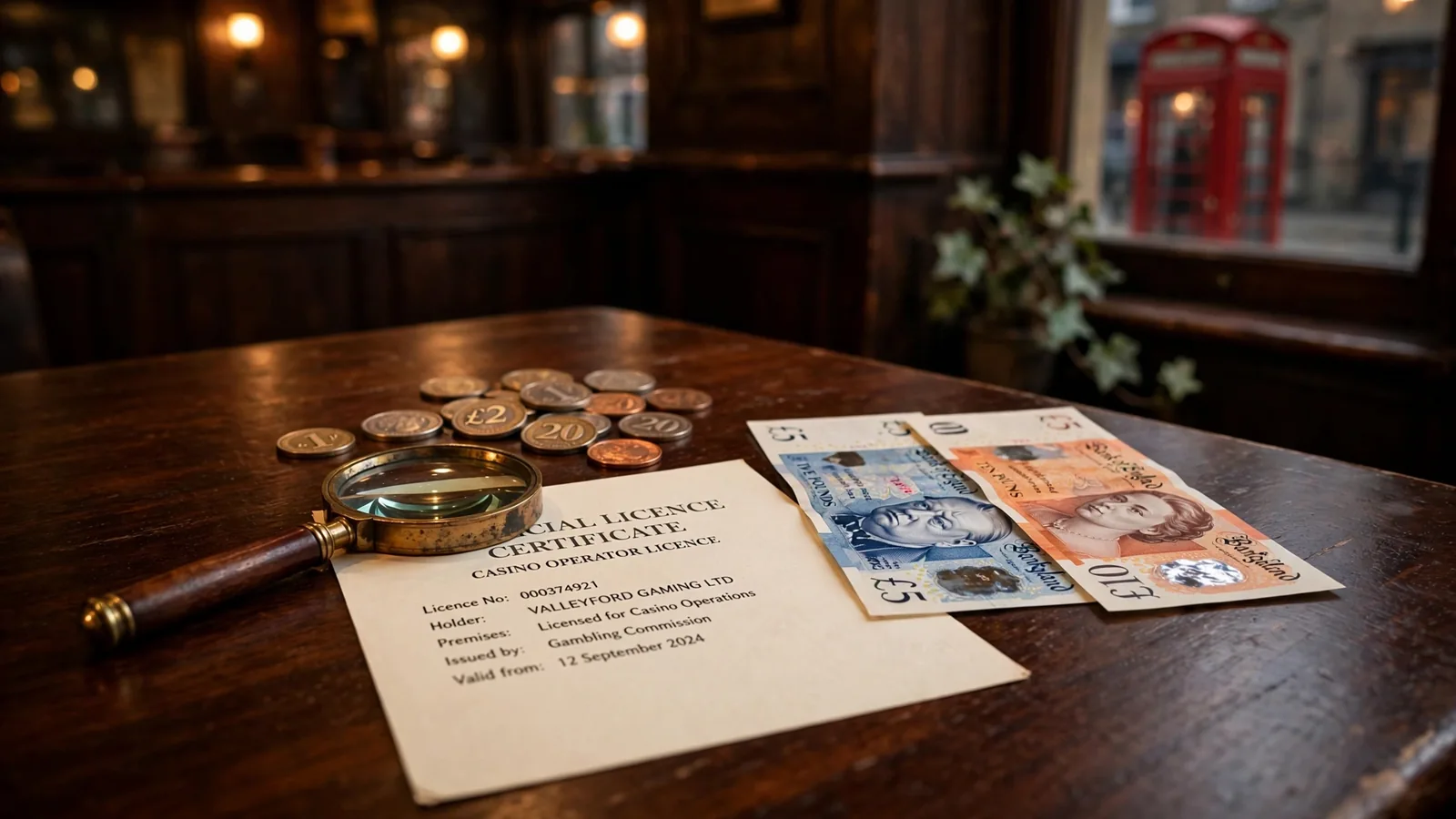
Deposit options are only one part of the decision: licensing, bonus conditions and spending limits also shape the experience.
Before You Deposit, Check Who Runs the Casino
A low deposit can catch your eye, but it tells you nothing about who is behind the casino. Before I put money into an account, I check the operator’s licence on the UK Gambling Commission’s public register. It is a less exciting check than browsing games or offers. It is also the one I would not skip.
The Gambling Commission oversees gambling in the UK, including online casinos. For consumers in Great Britain, remote gambling operators must hold the relevant Commission licence even when their equipment or offices are somewhere else. The location of a company’s servers does not remove that requirement.
That distinction matters when a site describes itself as “international” or makes a licence claim that sounds official. A licence from another jurisdiction is not a substitute for a UK Gambling Commission licence when an operator is offering remote gambling to customers in Great Britain. An offshore casino outside the UK system does not have that UKGC licence. So I look for the specific UK regulator, not just a badge or a general statement about being licensed.
30, 50, 100 or 150 No-Deposit Free Spins
Check the operator, not just the casino name
The name on a casino’s homepage may be a trading name rather than the legal name of the business running it. I start with the licence details shown on the site, then compare them with the Gambling Commission’s public register. The operator’s gambling website or app should display licence information and link to its register entry.
Check that the licence number and business details correspond to the operator named on the register. Then make sure the entry relates to the service you are actually using. A familiar brand name by itself is not enough: what matters is whether the business responsible for that casino is authorised for the relevant remote gambling activity.
The Commission grants operating licences to businesses. It also licenses individuals who carry out specified operating roles in Great Britain. For a player checking a casino, the business’s operating licence is the central point; an individual’s licence is not a replacement for it.
I used to treat a licence logo as if it settled the question. It doesn’t. A logo is a claim made on a page. The public register is where I check that claim against the regulator’s record.
Casino Bonuses: Free Spins, No-Deposit and More
Why the register check is practical
This is not paperwork for its own sake. A UKGC-licensed casino sits within the British regulatory system, with rules and oversight applying to its remote gambling service. If I need to raise a complaint, licensed operators must have an internal complaints process and provide access to an approved Alternative Dispute Resolution service. That does not mean every disagreement will go my way; it does mean there is a recognised route to follow.
Licensed casinos must also provide responsible-gambling tools, including self-exclusion. Those protections are relevant before you start, not only after something goes wrong. And a licensed operator must verify your age before allowing you to deposit. Online gambling in the UK is for adults aged eighteen or over, with the operator holding the appropriate Commission licence.
The register check will not tell you whether you will enjoy a casino, whether a game suits you, or whether an offer is worthwhile. It answers a more basic question: does the business running this service hold the required licence? I would rather establish that before entering payment details than try to untangle it afterwards.
A quick check before opening an account
Find the licence information on the casino’s website or app. Follow its register link, or search the public register using the licence details shown. Confirm that the operator’s identity matches and that the licence is current and relevant to remote gambling. If the details do not line up, pause instead of assuming the branding explains the difference.
This check is useful whether you have found a casino advertising a £1 deposit, a £10 deposit, or another amount. The advertised figure does not change the licensing requirement. I keep those questions separate: first, who is legally running the site; then, whether its account terms fit what I intend to do.
If a site makes a UK licensing claim but you cannot verify the operator on the Commission’s register, do not treat the claim as proof. I would not rely on a copied badge, a search snippet or confident wording on a promotional page. Check the regulator’s record itself.
Licence Check
Step 1: Find details
Locate the licence information on the casino’s website or app.
Step 2: Access the register
Follow the provided register link or search the UK Gambling Commission’s public register using the licence details.
Step 3: Verify identity
Confirm that the operator’s identity matches and that the licence is current and relevant to remote gambling.
It is a small pause before depositing. Worth it.
£1, £5, £10 or £15: What the Deposit Figure Actually Means
When I see a deposit figure on a casino page, I try not to treat it as a suggestion. It is a condition to check: the amount shown may be the smallest deposit the operator says it will accept, not an amount every player can use at every casino. A page mentioning a £1, £5, £10 or £15 deposit does not, by itself, tell you whether that figure is available for your account or chosen payment method.
The first thing I’d separate is the deposit amount you have in mind from the minimum the cashier displays. If you want to deposit £5, for instance, a stated £10 minimum would not meet that plan. If the displayed minimum is lower, that still does not establish that every deposit amount above it will be accepted. Check the cashier’s available amounts and the terms shown before confirming. Small distinction. Real money.
It also helps to notice what the figure is attached to. A casino page may discuss a minimum for depositing, while another figure may apply to a promotion. Those are not automatically the same condition. If you are simply trying to fund an account, focus on the deposit instructions. If the page connects an amount to an offer, read the offer’s own terms rather than assuming the general deposit figure settles it.
Online Casino 500% Bonus: Terms and Conditions
I once saw a low number and mentally rounded it into “I can put in whatever suits me.” That was lazy reading on my part. A headline is not a promise about every amount, and a number presented beside an offer may have a different purpose from the amount shown at the cashier. Take a moment to identify which one you are looking at.
A specialist review reports that casino bonus deposit thresholds can include £10, £20 or £50. That is a reported range, not a rule for every operator, and it does not establish that a casino accepts a £1, £5 or £15 deposit. Another specialist review says most UK casino bonuses require a £10 minimum deposit; treat that as a description in that review, not a guarantee about a particular offer. The live terms are what matter for the casino you are checking.
So, if you are comparing a £1, £5, £10 or £15 minimum, use those amounts as questions to verify, not as a list of options you can assume are available. Look for the stated minimum, confirm the amount in the cashier, and check whether any separate offer condition changes what you need to deposit. If the information does not line up, pause rather than guessing.
That is the useful reading of the number: it tells you where to look, not what you ought to spend. A lower displayed minimum does not make a deposit a better decision, and a higher one does not mean you need to meet it. Work out what you intended to deposit first, then check whether the operator’s stated terms actually match.
Do
- Check the cashier’s available amounts before confirming.
- Read the offer’s own terms if the figure is connected to a promotion.
- Identify whether the number is a general deposit minimum or a bonus threshold.
Don’t
- Treat a deposit figure on a page as a suggestion or a promise.
- Assume every amount above the minimum will be accepted.
- Mentally round a low number into an assumption that any amount fits.
A £15 Minimum Deposit: Check the Bonus Threshold Too
A casino can accept a £15 deposit and still not count it towards the promotion you had in mind. The amount needed to open an account or fund it is one thing; the qualifying deposit for a particular offer is another. I used to see a low entry figure and assume the advertised deal came with it. That assumption is where the small print catches you.
Before depositing, look for the terms attached to the specific promotion, not just the payment or account page. Find the qualifying deposit and check whether your planned amount meets it. If the casino’s stated minimum is £15 but the offer requires a higher qualifying deposit, putting in £15 may fund your account without making you eligible for the bonus. “Available” can mean available to claim only once its conditions are met.
That distinction matters just as much when the offer has a minimum below the casino’s own deposit floor. The promotion might describe a qualifying amount, but you still need to be able to make a deposit the operator accepts. Read both conditions together. Neither figure, on its own, tells you what will happen to your deposit.
Separate the casino minimum from the offer minimum
I now read the offer as its own set of rules. Does it apply to the deposit you are about to make? Is there a qualifying deposit stated in the terms? Does the offer apply to the payment method you intend to use? The practical value depends not only on the advertised reward but also on eligibility, the qualifying deposit, game contribution, expiry and withdrawal conditions.
Online Casino with a 300% Bonus: How It Works
That means “£15 minimum deposit” is not a promise that every promotion will start at £15. It describes an entry point only if the operator’s account or cashier terms say so; it does not automatically define the threshold for a First Deposit Bonus. A specialist review has reported bonus qualifying deposits of £10, £20 or £50. Those figures are that review’s reported examples, not a rule for every UK casino or a guarantee about a live offer. Check the current terms for the promotion you are considering.
The difference can be easy to miss because promotional pages often put the headline reward in large type and the qualifying conditions elsewhere. I look for the exact offer terms before treating the bonus as part of the deal. If I cannot match the qualifying deposit to the amount I intend to deposit, I do not assume the offer will be applied.
Check eligibility before pressing deposit
An offer may also be restricted to certain players or deposits. Read the eligibility wording and check that you are looking at the terms for the right promotion, rather than a general page describing other deals. A headline can look relevant while the detailed conditions narrow who can claim it or which deposit counts.
There is no useful shortcut here: the live offer is what matters. Promotions can change, and a description elsewhere may not reflect the terms shown when you register. Use the operator’s current offer page and the terms linked to it. If the qualifying deposit is unclear, ask the operator before depositing rather than relying on a banner or an assumption.
Attention: If the casino’s minimum deposit is £15 but the promotion requires a higher qualifying deposit, putting in £15 may fund your account without making you eligible for the bonus.
I also keep the decision simple: if I would not make that deposit without the promotion, I pause and check the terms again. The bonus should not turn an amount I had not planned to spend into an automatic choice. A stated threshold is a condition for eligibility, not a reason to stretch your budget.
So, when an online casino advertises a £15 minimum, treat that as separate from the promotion’s qualifying deposit until the live terms confirm they match. Check the exact offer, confirm your eligibility and make sure the deposit you plan to make meets the stated condition. If it does not, the account may still receive your money, while the bonus does not follow. That is the detail worth checking first.
When “£15” Is the Minimum, Not a Spending Target
A listing that says “£15 minimum deposit” can sound like a suggestion about how much to put in. It isn’t. It describes an entry condition: the casino may not accept a deposit below that amount through the route you are using. It says nothing about what you ought to deposit, how long you should play, or what you can afford to lose.
I had to learn to separate those ideas. Seeing a figure presented as a neat starting point made it easy to treat it like a sensible stake, rather than a threshold set by the operator. That was advertising doing its quiet work. “Start with £15” sounds like a plan; “the cashier may require at least £15” is the less exciting reality.
Online Casino with 400% Bonus: How It Works
If you are checking an online casino with a £15 minimum deposit, look at the actual cashier information before deciding whether to proceed. A figure in a headline may not explain how the condition applies to your account or chosen payment route. Don’t assume that every casino accepts the same amount, or that a result labelled as a £15 deposit option guarantees you can deposit exactly that sum. Read what the operator shows you, and stop if it does not match what you expected.
The more useful question is not whether £15 is a “small” deposit. That depends on your own circumstances, and a label cannot decide it for you. Ask whether losing the amount would affect money you need for bills, food, travel or anything else. If it would, it is not spare money. If you are unsure, leaving the deposit alone is a sound choice.
I also find it helps to decide on a personal spending boundary before opening the cashier. Otherwise, the amount on the screen can become the amount I negotiate with myself. A minimum can create that nudge: you came intending to spend less, but now the site appears to be asking you to cross your own line just to get started. You do not have to accept that bargain. Choose another option, or walk away.
A minimum deposit is not a target, a prediction of a good session, or proof that the casino is “legit”. Those are separate questions. The figure alone does not tell you whether the operator is suitable, whether the payment will work, or whether you will enjoy playing. Treat it as one practical condition to check—not as a reason to stretch your budget.
Financial Risk
Ask whether losing the deposit amount would affect money you need for bills, food, or travel; if it would, it is not spare money.
If you do decide to deposit, keep the decision yours. Set a limit that fits your finances, not the casino’s entry requirement, and do not add more simply because the first amount is gone. I have made that mistake: turning one decision into a second because I wanted the first to feel worthwhile. It didn’t. A deposit is money at risk, not money owed back to you.
So when a casino states a £15 minimum deposit, read the sentence literally. It may mean you cannot enter with less through that option. It does not mean you should put in £15. A threshold is the operator’s rule; your spending boundary is yours.
Real-Money Play: Read the Bonus Terms Before You Start
A cash deposit and bonus funds can appear together in your account, but they are not necessarily treated alike. Your deposit is money you paid in; a promotion adds funds under its own conditions. The balance shown on screen may combine them, so I check the offer terms before assuming the whole amount can be withdrawn whenever I like.
The key phrase is “wagering requirement”. In plain English, it tells you how many times the bonus amount must be wagered before bonus winnings become eligible for withdrawal. It applies to the bonus component, not automatically to every pound you deposited. The exact calculation and what happens to the funds while you play depend on the offer’s wording.
I have made the mistake of looking only at the bonus headline. A £15 minimum deposit at a real-money casino does not, by itself, tell you whether taking a promotion is worthwhile or what you must do before withdrawing. A casino may let you play without claiming an offer, while claiming one can attach conditions to the bonus and associated winnings. Check what the terms say happens to your cash balance if you accept or decline.
Online Casino with a 600% Bonus: What It Means
A specialist review has reported wagering requirements of 40–50 times the bonus for many sign-up offers, while also noting that some offers set a lower requirement or none. Treat that as a snapshot from a review, not a rule for every UK casino. The operator’s live terms are what matter for the offer in front of you. Another specialist review has put the average requirement for UK casino bonuses at 40 times the bonus amount; that, too, is a reported average rather than a promise about any particular promotion.
Before playing, find the definition of the wagering requirement, the balance it applies to and the conditions for making a withdrawal. Look for any maximum-bet rule while bonus funds are active, and check whether the terms say that breaking it can affect eligibility. A small detail can matter. Don’t skim it.
If the wording is unclear, ask the operator to explain it before accepting the promotion, and keep a copy of the terms that apply when you claim. For real-money play, the useful comparison is not simply the deposit amount against the bonus headline. It is the money you put in, the bonus conditions you agree to and the route from play to a permitted withdrawal. If those terms do not make sense to you, leaving the offer unclaimed is a valid choice.
Playing on Your Phone? Set the Limit Before the First Deposit
A phone makes it easy to open an account in a spare moment, then start playing before you have thought through what you can afford. I have made that mistake: the screen felt casual, so I treated the spending as casual too. It wasn’t.
Before a first deposit, a UK-licensed remote operator must prompt you to set a financial limit.
Before a first deposit, a UK-licensed remote operator must prompt you to set a financial limit. Take that step seriously rather than tapping through it to reach the games. Choose a boundary that fits your budget, not one based on what an offer seems to invite you to spend. If the amount feels uncomfortable to set, that is worth noticing.
Account-level controls should remain accessible after setup, so you can review or change your limits. Find them while you are calm, not halfway through a session. I’d check where they sit before adding funds; it is a small bit of housekeeping that can matter when your attention is elsewhere.
A limit is not a target. It is a boundary for your account, and it should reflect money you can afford to lose without affecting essentials. Keep it separate from bills and other commitments. If you are unsure what boundary to choose, pause instead of depositing while you work it out.
Mobile screens can make buttons and menus feel close together. Slow down when confirming account settings, and read the wording on the limit control so you know what it applies to. Don’t assume that a setting covers every kind of gambling activity or account action unless the operator explains that clearly.
I also avoid treating a small screen as a reason to skip the account checks I would make on a computer. Set the financial boundary first, make sure you can find the controls again, and only then decide whether to continue.
Boring, but useful.
Online Casinos with Bonus Crab Offers in the UK
PayPal and Casino Deposits: Check the Funding Route
Seeing PayPal mentioned beside a casino does not tell you whether you can use it to fund that account. The route matters: a wallet payment can be blocked if the wallet allows credit-card funds to be used for gambling. UK-licensed casinos cannot accept credit-card payments for gambling, including credit-card funding routed through a money service business.
That is the detail I used to skip. I treated the payment logo as a simple yes-or-no answer, then found the actual funding source could matter too. Check the casino’s cashier and payment terms, and make sure the method you intend to use is eligible. If the terms are unclear, ask the operator before trying to deposit. Don’t assume that a card linked to a wallet will be treated like a debit card.
The same applies to a stated £15 minimum. It does not establish that PayPal is accepted, or that a PayPal payment will meet that minimum. The cashier may show the methods available to your account, while the operator’s terms explain any restrictions on how a wallet can be funded. Read both before confirming anything.
“PayPal accepted” is only useful if it describes the route you can actually use. I would check the payment source, the casino’s rules, and the amount shown in the cashier rather than relying on a logo or a general claim elsewhere. If the route is not available, choose another permitted method or leave the deposit for another time.
Keep your payment details in mind, too: UK gambling operators cannot take credit-card payments, and a wallet cannot be used to get around that rule when it allows credit-card money to fund gambling. No workaround.
UK-licensed casinos cannot accept credit-card payments for gambling, including credit-card funding routed through a money service business.
Slots, Wagering and the £15 Deposit
A £15 minimum deposit tells you what you need to put into an account to meet that casino’s entry condition. It does not tell you how much of your play will count towards a bonus wagering requirement. I used to treat those as one thing: deposit, spin, clear the offer. They are separate parts of the terms.
Wagering requirements set the amount of play needed before bonus funds, or winnings linked to them, can be withdrawn. The game you choose can affect how quickly that requirement is counted. Slots often receive full credit, while table games, video poker and live games may count for only a fraction of each stake, with some offers assigning them no credit at all. The exact wording of the promotion matters.
That difference can be easy to miss. A game may be available to play with bonus funds but still contribute little, or nothing, towards clearing the requirement. “Eligible games” sounds broad; the practical question is whether the game’s wagering contribution is stated and what it is. Check the promotion’s terms or game-specific information rather than assuming every casino game counts equally.
For slots, the stated contribution can make each qualifying stake count in full towards the requirement. Other categories may add less. That does not make slots automatically the better choice: the contribution figure describes how play is counted, not whether you will win, how long your balance will last, or whether a bonus is worth taking. I learned that distinction after chasing a requirement while barely checking which games actually counted. A costly lesson.
Online Casinos with Daily Promotions in the UK
The deposit figure still has a limited role here. If a site lists a £15 minimum, that is not evidence that a particular slot is unlocked by depositing that amount, nor that the deposit itself satisfies a bonus condition. The offer may have separate terms about which games qualify and how play is credited. Read those before deciding whether to opt in; don’t infer the rules from the deposit label.
I’d also keep bonus play separate in my head from ordinary cash play. When a promotion is active, the balance may be subject to conditions, and a game’s contribution can affect progress towards meeting them. If the terms are unclear about a slot or category, pause rather than assume that every spin advances the requirement. “Counts towards wagering” is the useful detail; a game’s name or the size of the deposit does not answer that on its own.
So, when comparing slots around a £15 minimum deposit, look beyond the amount needed to open the account. Find the contribution assigned to slots, check whether other game types count differently, and make sure you understand which balance and play the requirement applies to. The number on the deposit page is only one part of the picture. No shortcut.
A £15 Casino Bonus: Work Out What You Would Actually Get
A “£15 bonus” can mean different things. It might describe the amount of your deposit, the bonus credited alongside it, or a qualifying deposit needed to unlock an offer. I’ve mixed those up before and counted money that wasn’t actually available to me.
How a Deposit Match Bonus works
If an offer matches a £15 deposit at 100%, the bonus would be £15, provided the deposit qualifies and the offer applies to you. However, a cap may stop the bonus from growing even if you increase your deposit amount.
For a Deposit Match Bonus, check the percentage and the cap together. A specialist review describes offers ranging from 50% to 200% of the deposit, and gives 100% up to £100 as one example of how a match can be presented. These are reported offer patterns, not a promise about what a particular casino will offer now.
The arithmetic is straightforward once you know the terms. If an offer matches a £15 deposit at 100%, the bonus would be £15, provided that deposit qualifies and the offer applies to you. But a cap can stop the bonus growing even if you deposit more. If the cap is reached, adding to your deposit will not raise the bonus. Bigger deposit, same bonus.
Then look beyond the headline. Is £15 the qualifying deposit, or merely the amount used in the promotion’s example? Is there a maximum bonus, and does the offer apply to your account? The live offer’s eligibility, game contribution, expiry and withdrawal rules all affect what the bonus is worth in practice. A large percentage can look generous while leaving you with terms that don’t suit you.
Also separate a Deposit Match Bonus from a no-deposit offer. “No deposit” does not, by itself, tell you that a £15 deposit is required or that depositing £15 will unlock anything. Read the offer’s own qualifying conditions rather than joining two promotional labels together.
I now work out the credited bonus from the stated percentage, check where the cap bites, and confirm the qualifying deposit before treating the headline as real value. The maths takes a moment. The terms matter more.
Before You Claim: Check the Bonus Rules, Not the Headline
I’ve learned not to treat a bright “claim now” button as the offer. The useful information is usually in the terms beside it: who qualifies, when you must act, which games count and what could invalidate the promotion. Read those before opting in, not after the bonus has landed.
Online Casino with 100% Bonus: Terms Explained
Start with eligibility. Check whether the offer is for new customers, existing customers or a particular group, and whether you must select it during registration. A qualifying deposit may need to be made within 48 hours of registering, so the order of events matters. If you miss that window, making the same deposit later may not qualify. Don’t assume the casino will apply the offer retrospectively.
Then check the restrictions that can catch people out. Many online casinos limit a promotion to one per household or IP address, and players can generally claim only one new-player bonus from an operator. That can matter if someone else in your household has already used an offer, or if you have an existing account. Read the eligibility wording carefully; creating another account is not a sensible workaround.
“Free” can have a rulebook attached. Look for the qualifying games, wagering contribution, expiry, and any conditions on withdrawing winnings. A game might contribute less towards a wagering requirement than another, or be excluded altogether. The headline alone won’t tell you. I used to skim straight to the reward. Bad habit.
The UK has a cap on wagering requirements for bonus funds: since 19 January 2026, they cannot exceed ten times the bonus amount. That does not mean every offer uses that maximum, or that meeting the requirement automatically makes the promotion worthwhile. Check the actual terms and whether other conditions still apply.
If you are comparing a £15 minimum-deposit casino offer, separate the casino’s deposit rules from the promotion’s eligibility rules. A site can accept your deposit while the offer remains unavailable to you, or while you have missed its qualifying period. The word “best” on a page does not settle that. What matters is whether you qualify and can meet the rules without changing what you planned to spend.
Before claiming, I’d check the offer is visible in my account, confirm the deadline and eligibility, and save or note the terms as shown. If a condition is unclear, ask the operator before depositing rather than relying on a headline or an old promotion page. Small print first. Then decide.
Do all games count toward bonus wagering?
No. Slots usually contribute 100%, while table games, video poker and live games may contribute between 0% and 20%.
What is the maximum wagering requirement in Great Britain?
The maximum is 10 times the bonus amount, as of 19 January 2026.
How do I check if an online casino is licensed in the UK?
Find the operator’s licence details on its website or app, then check them against the UK Gambling Commission’s public register. Confirm that the operator matches and that its current licence covers remote gambling.